CLIENT
Prevayl / Health Tech
ROLE
Senior Product Designer
FOCUS
01 — THE CHALLENGE
Designing for Invisible Hardware
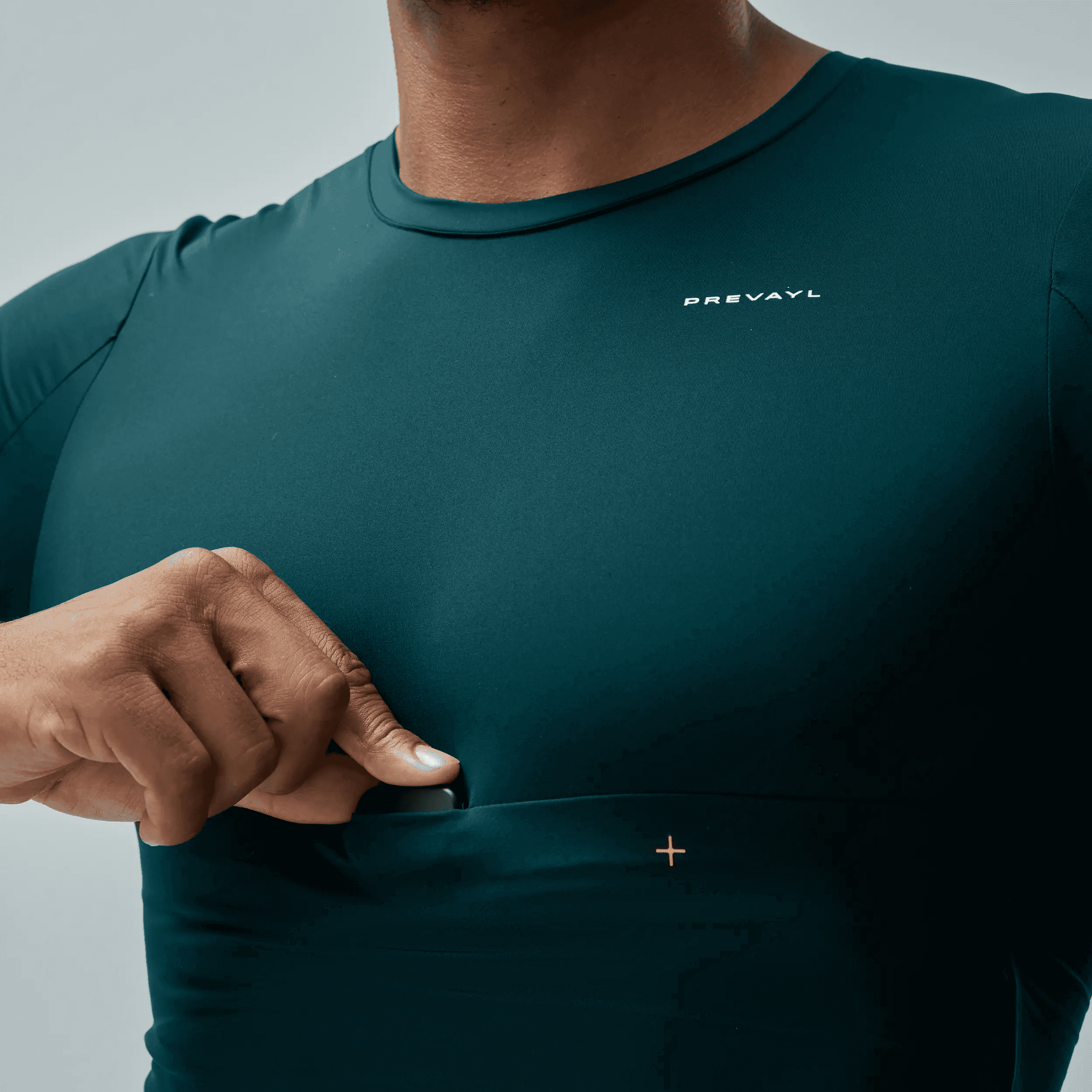
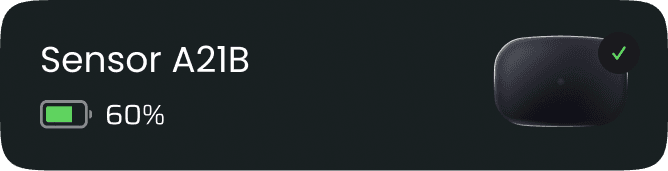
Prevayl builds smart clothing with embedded sensors to help athletes track performance and recovery. A small sensor inside the user's shirt captures 1,000 data points every second.
The core challenge was translation. We needed to take medical grade data (heart activity, body impedance, and movement) and turn it into a clear, glanceable interface for a user who is tired, distracted, and mid workout.
02 — THE ECOSYSTEM
Three Modes for Three Needs
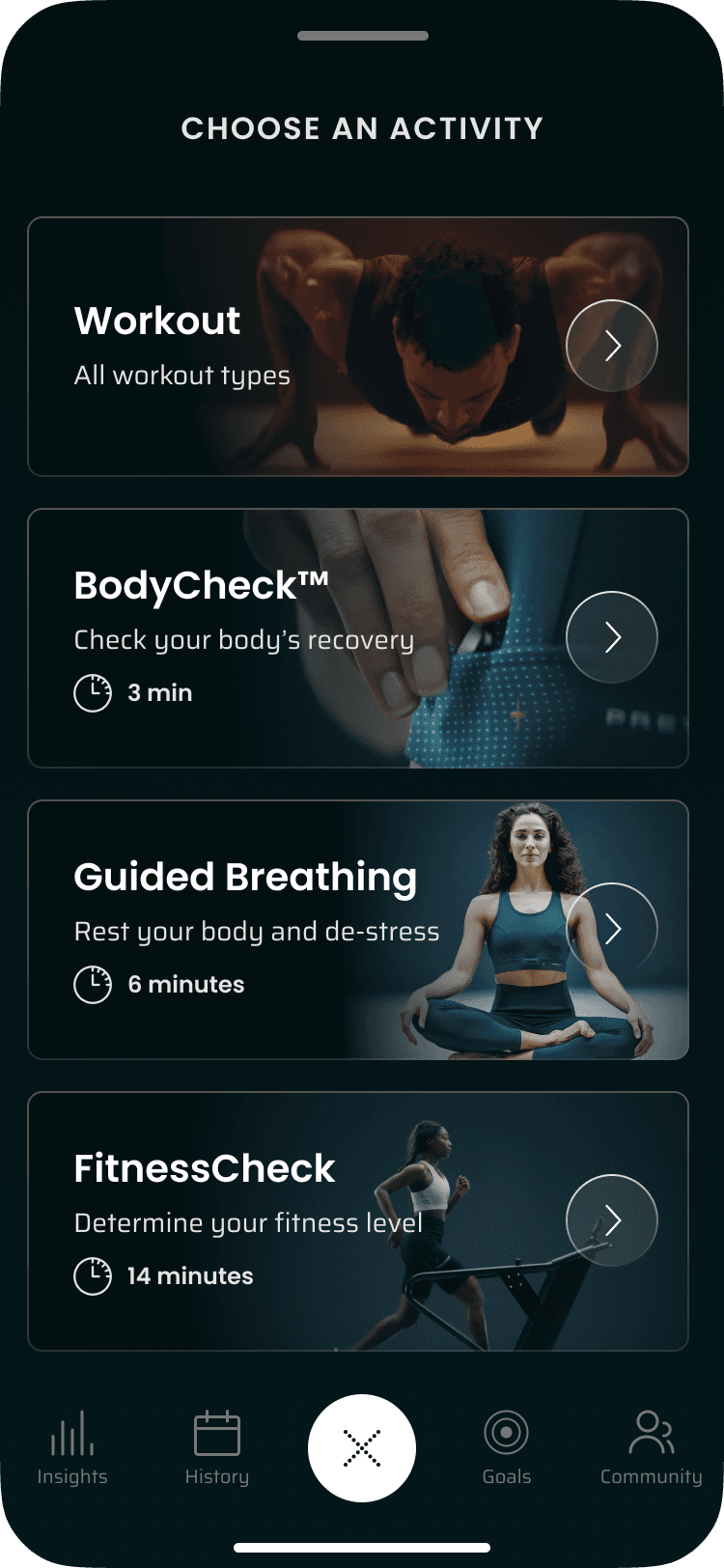
Working alongside sports scientists, developers and a design peer, I mapped out a UX ecosystem built around the athlete's daily loop: Recovery, Training, and Analysis.

1. The Morning Gatekeeper
Athletes often feel guilty for taking a rest day, but training on an exhausted body leads to injury.
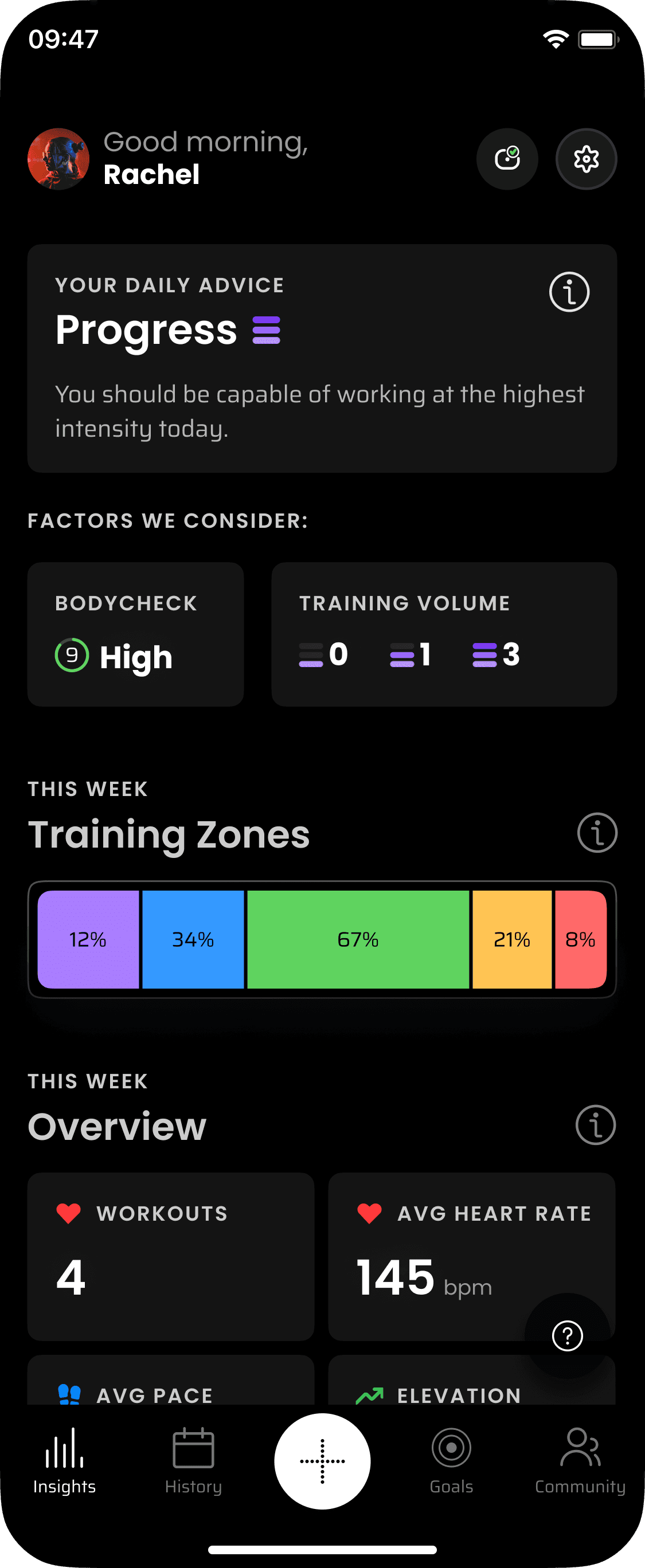
We designed BodyCheck, a feature that asks the user to lie down and then stand up. This simple movement captures the heart's reaction to gravity, giving the athlete a clear, data backed permission slip: Train, Rest, or Progress.
2. The Live Workout
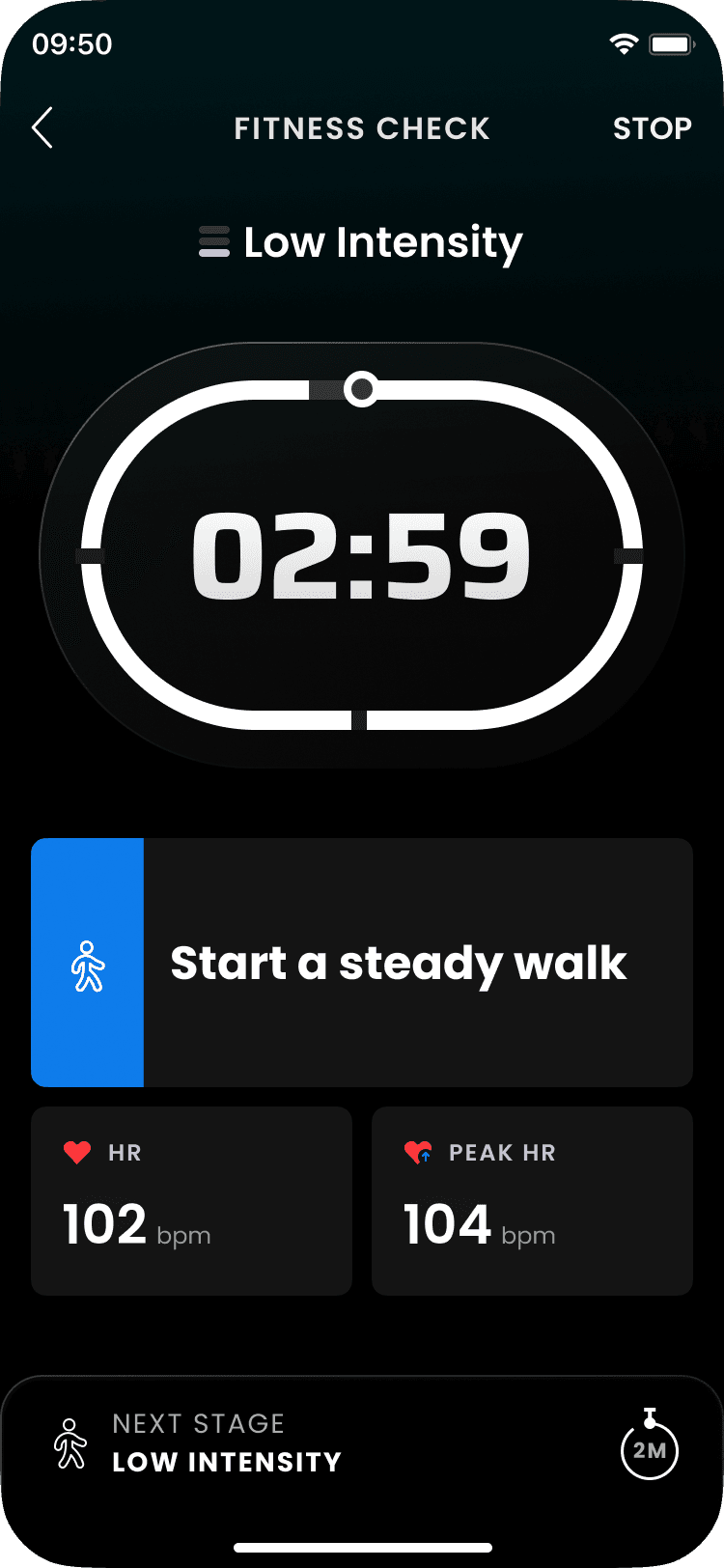
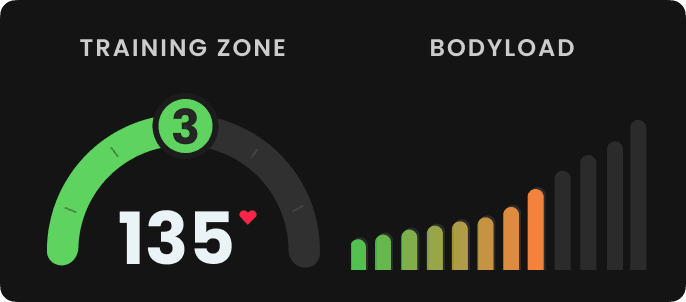
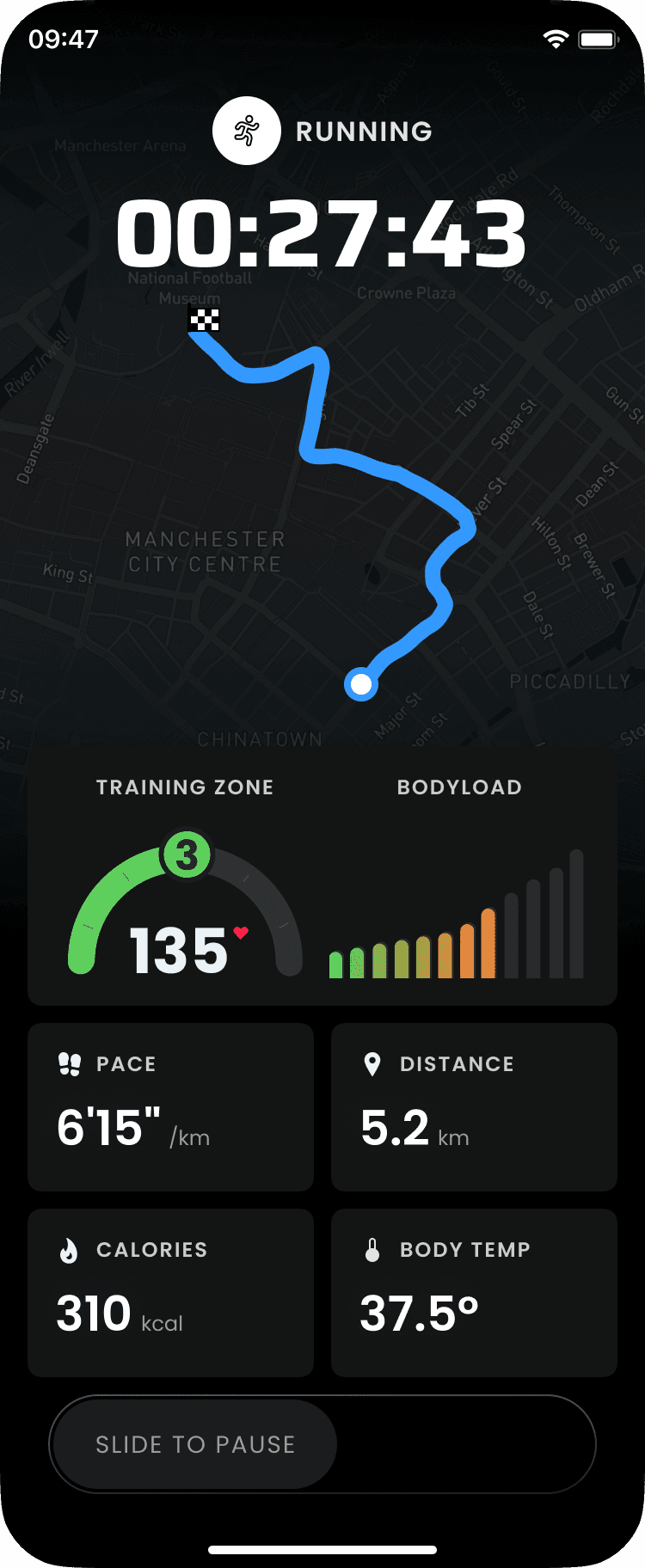
Whether sprinting or lifting, users only have split seconds to process on-screen data. I prioritised two universal signals: Training Zone and Body Load. By using high contrast typography and color coded zones, athletes can check their status instantly without breaking their physical flow.
3. The Feedback Loop
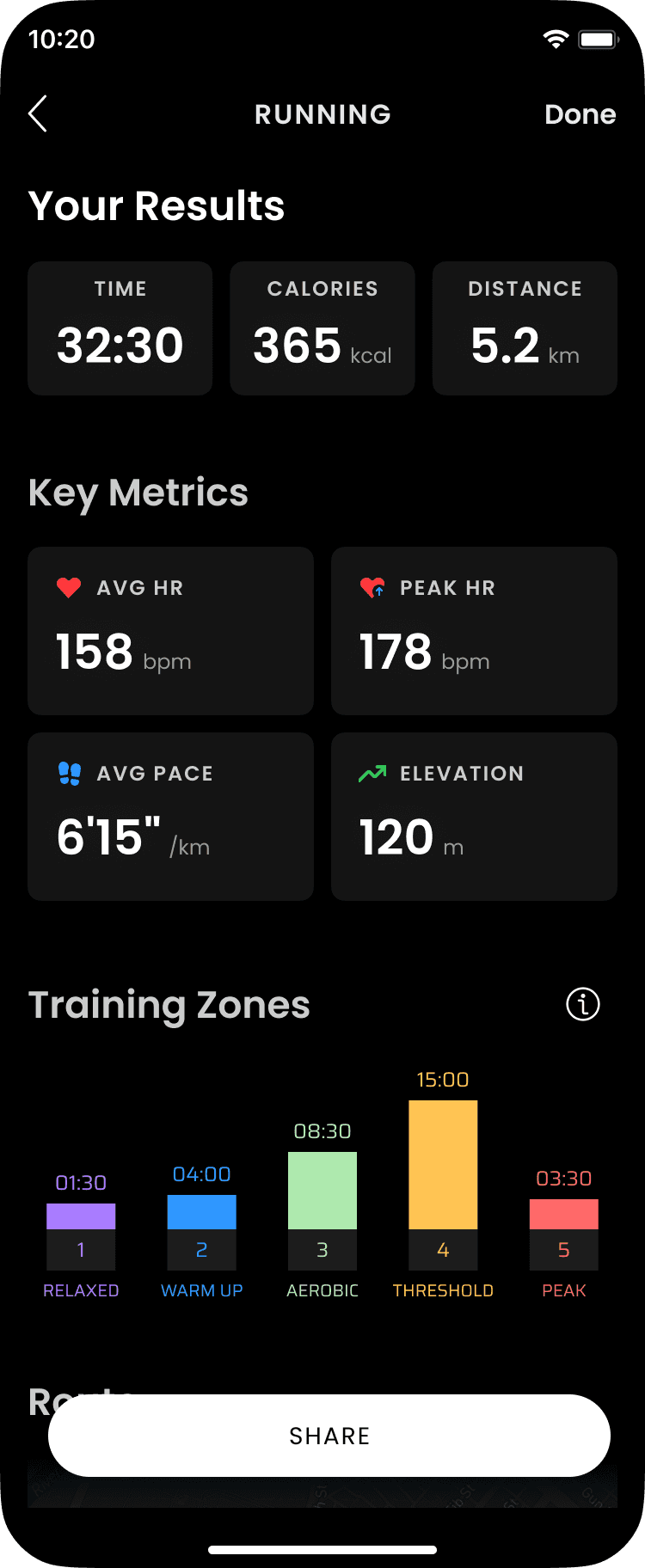
After the sweat, users want validation. I designed a post-workout summary that directly overlays Heart Rate onto Training Zones. Users can immediately see if they hit their intensity targets without digging through complex tables.
03 — DEEP DIVE
The Fitness Check Protocol
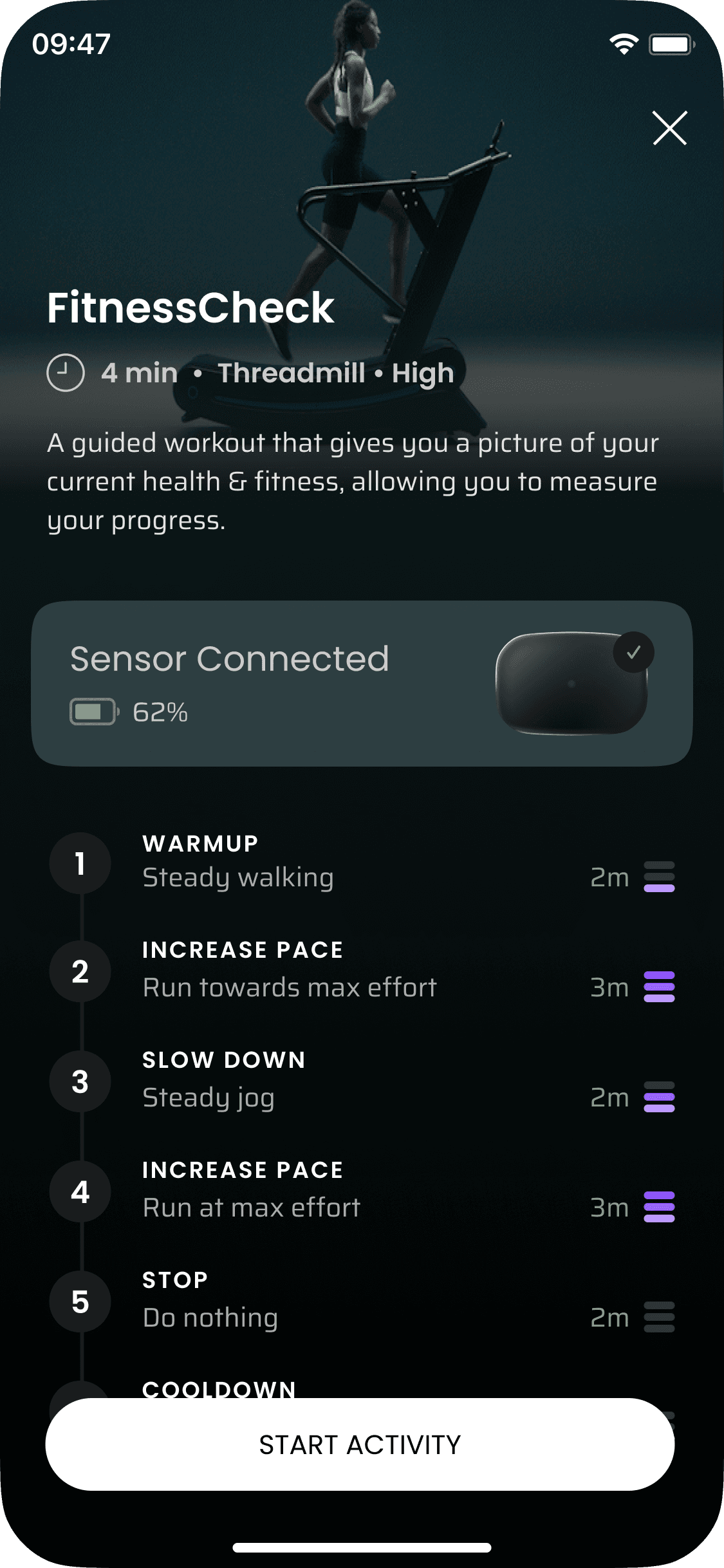
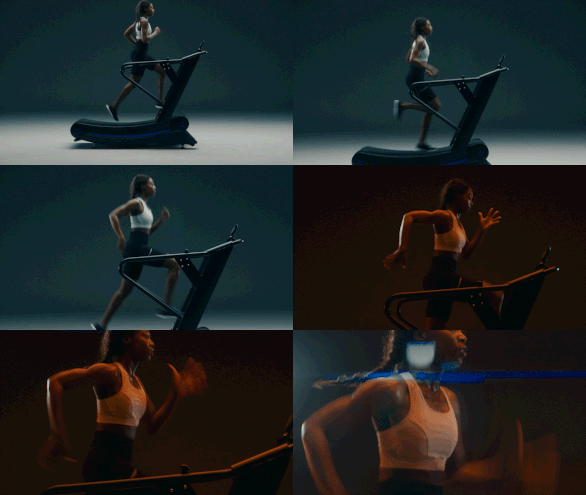
The daily ecosystem works well, but to make the data truly accurate, the system requires baseline calibration. The FitnessCheck™ (a 14-minute treadmill test) designed to measure true cardiovascular health.
The Problem
Most fitness apps rely on the standard "220 minus age" formula to guess your Training Zones. This is often inaccurate. If an athlete’s baseline is wrong, they might train too hard (injury risk) or too soft (no progress). We needed to replace this generic guesswork with a real test to capture real numbers.
The Reality of Maximum Effort
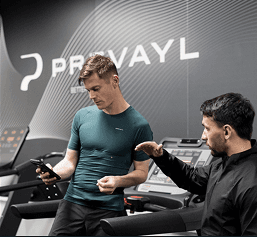
A Max Heart Rate test requires total physical exhaustion. At 180+ BPM, vision shakes, cognitive ability drops, and reading text becomes virtually impossible. Our initial prototype failed because it acted like a laboratory manual, relying on text instructions that users couldn't read while running.
Lowering the Psychological Barrier
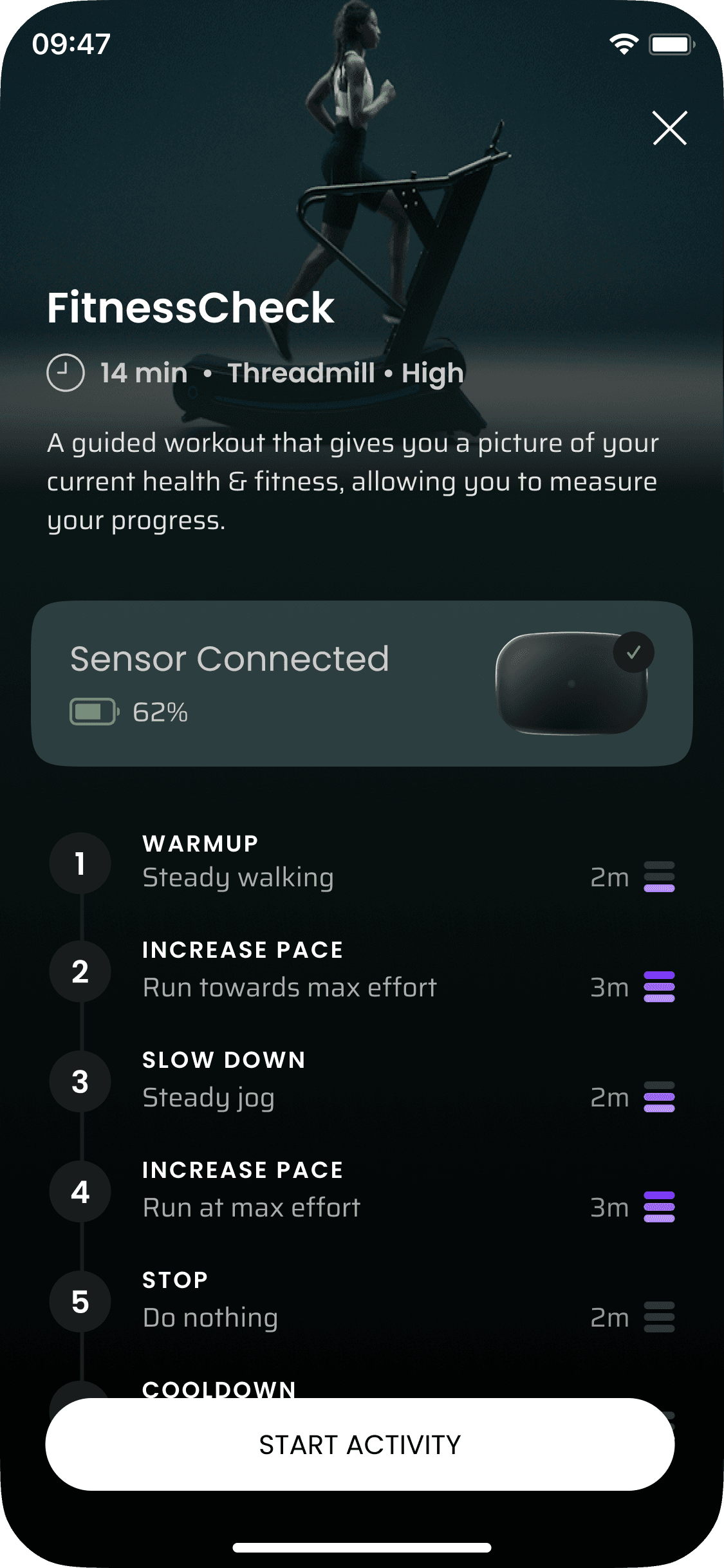
Asking a user to push to 100% effort is a psychological hurdle. People are naturally anxious about running to failure. To counter this, I prioritised timeline transparency. By visualising exactly when the hard work begins and ends, the interface transforms an intimidating, open ended event into a finite, manageable checklist.
Designing a Visual Anchor
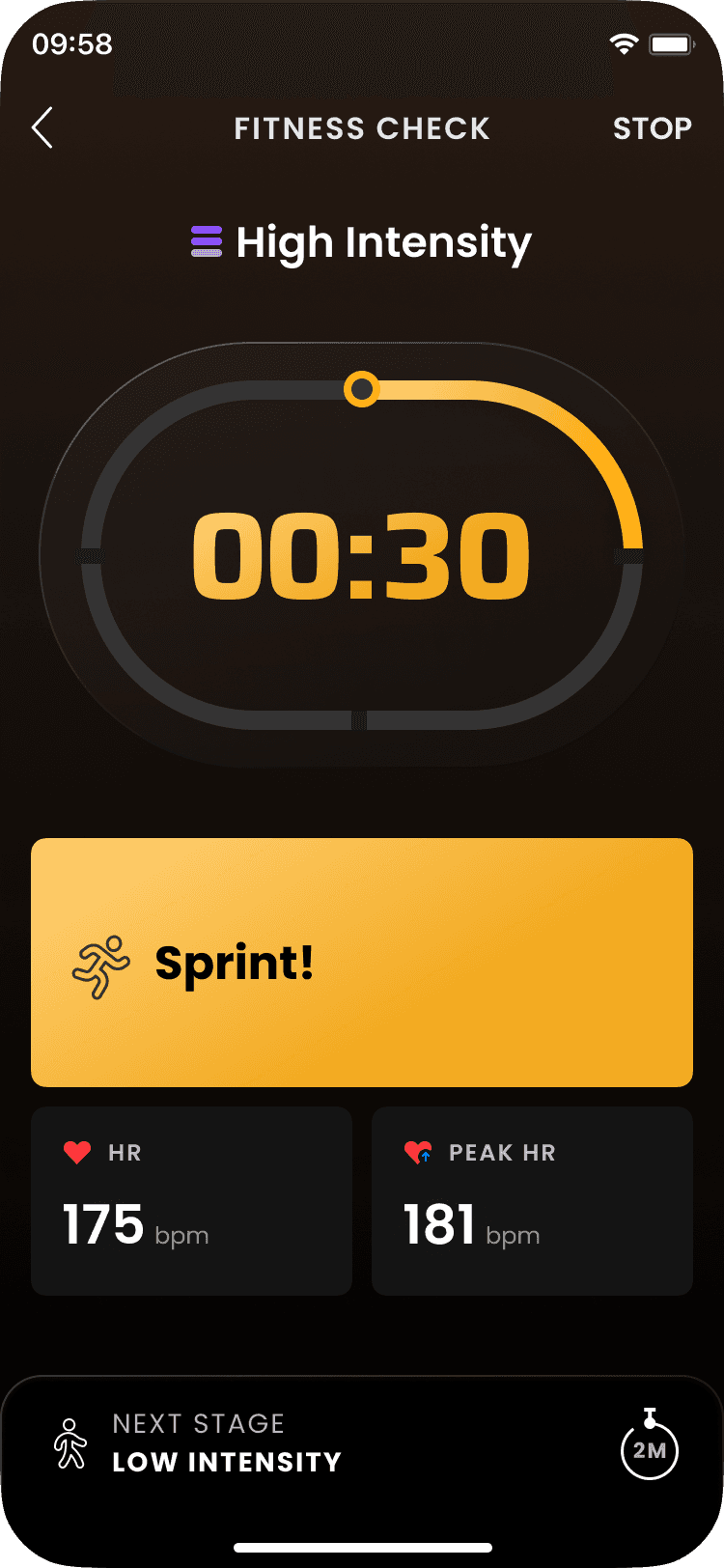
Once the run starts, the challenge shifts from psychological to physiological. To solve the "tunnel vision" problem at 180 BPM, I replaced text instructions with a Visual Racing Track. At peak intensity, users don't need to read. They simply need to see how much track is left so they can keep pushing.
From Guesswork to Precision
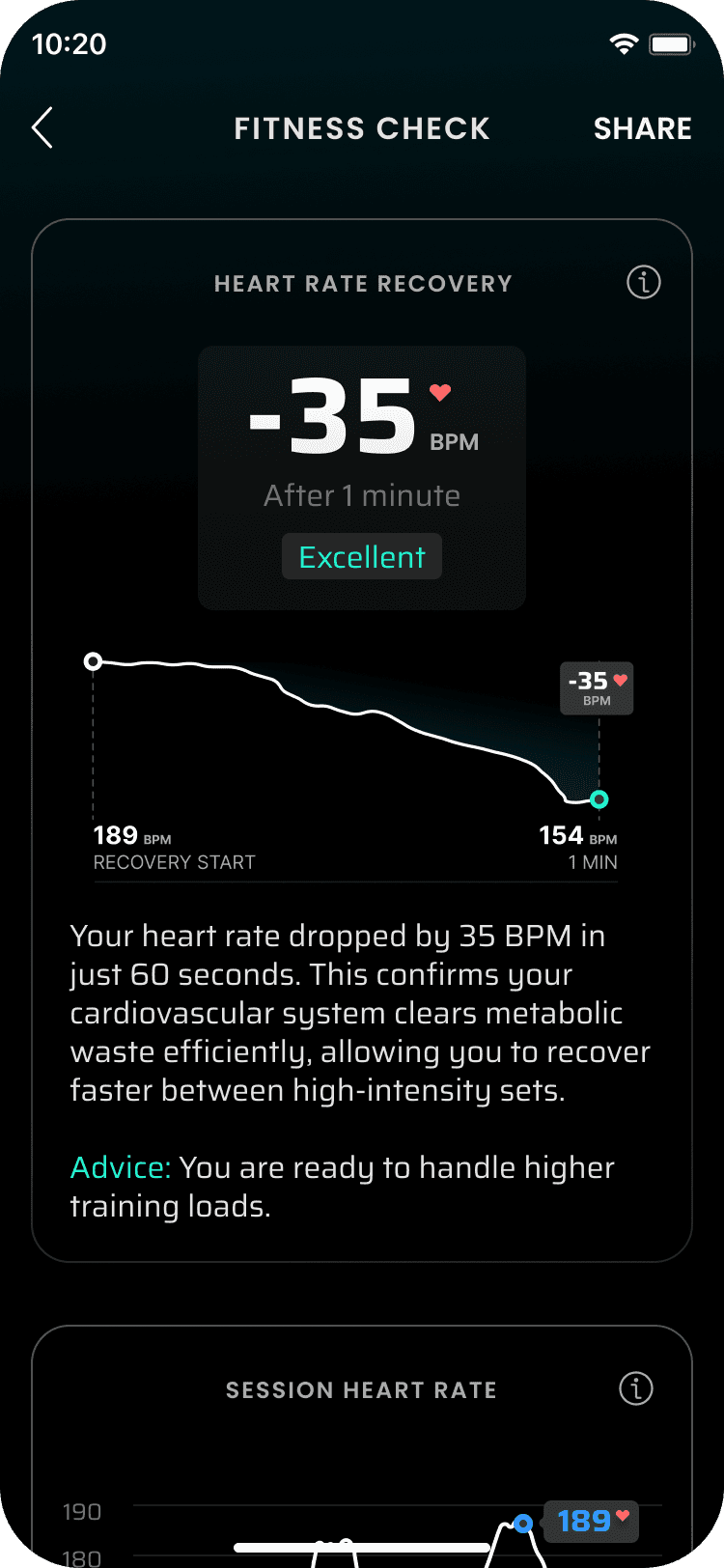
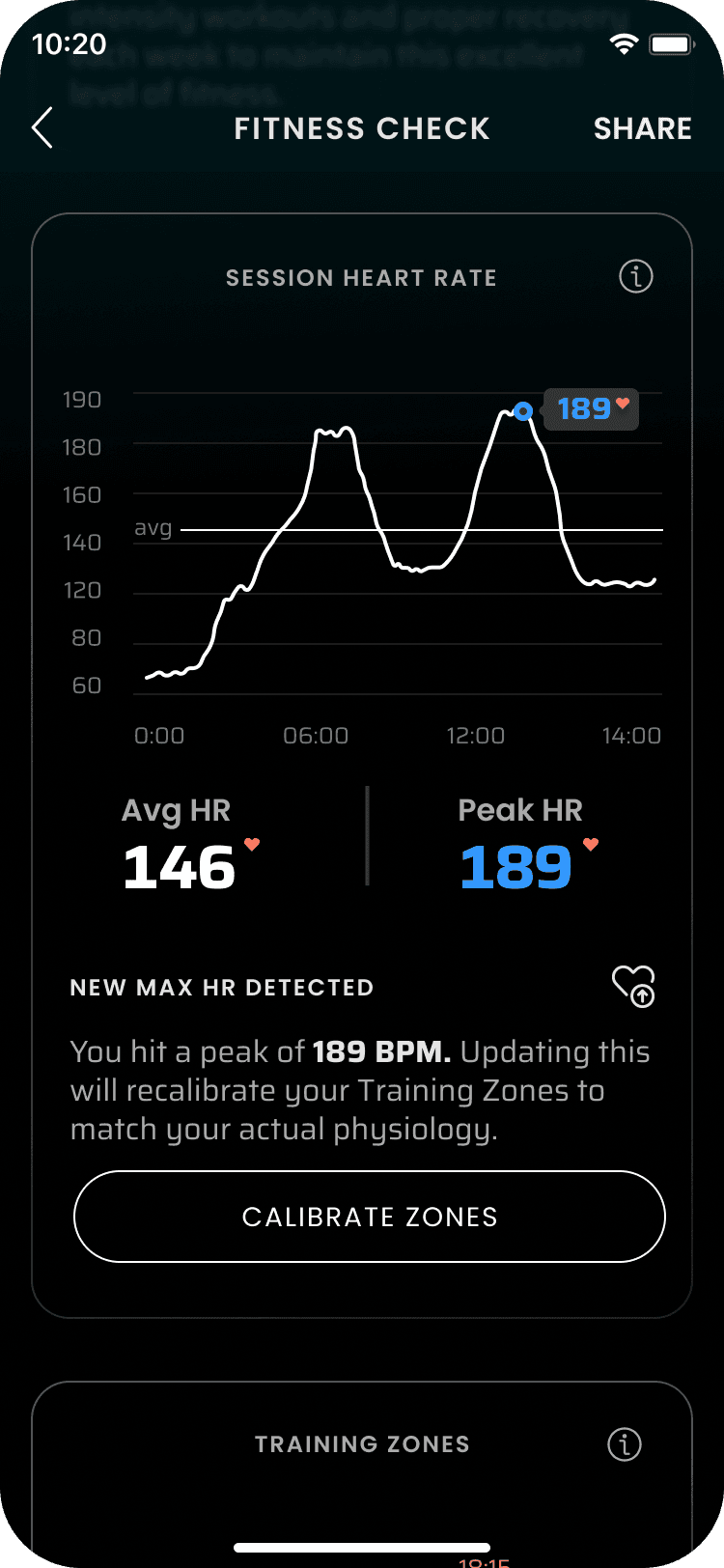
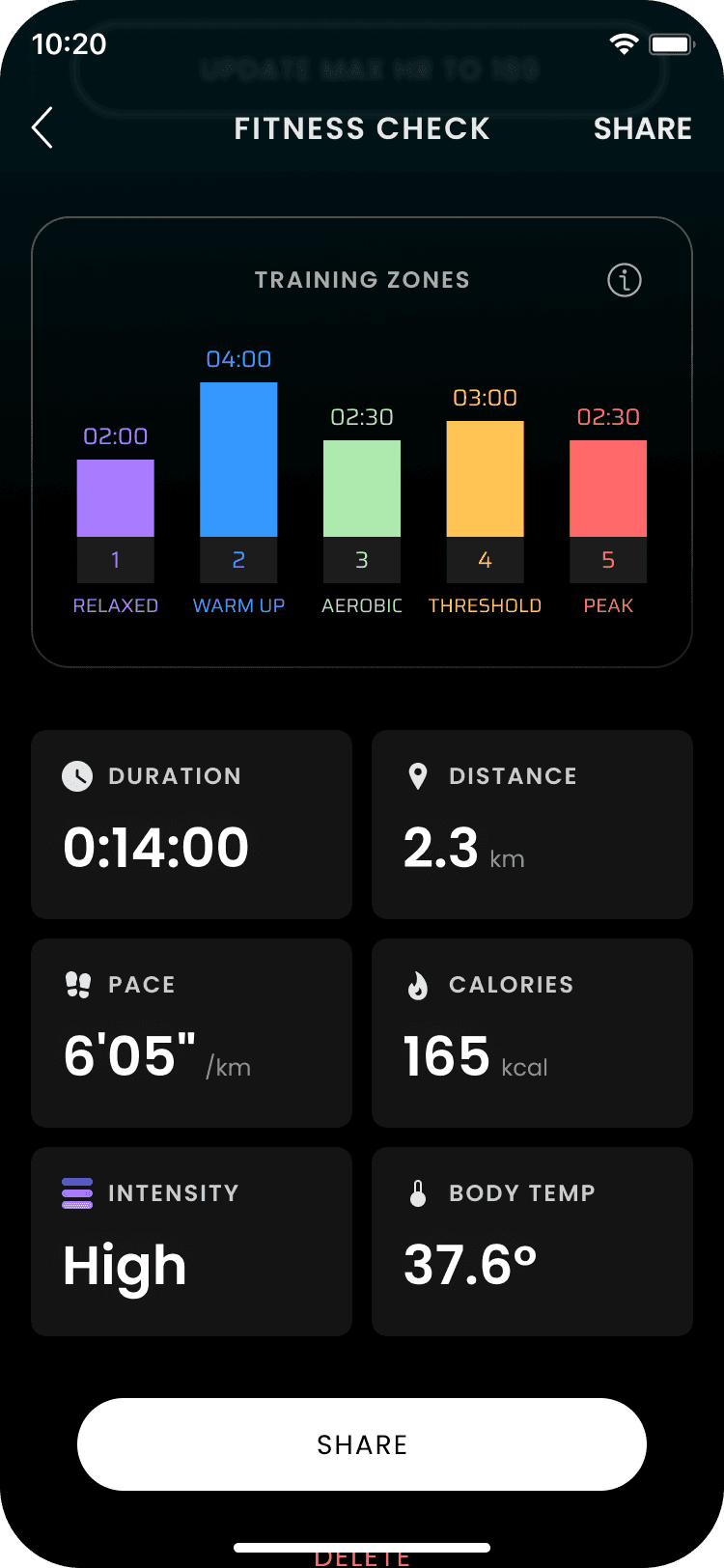
A max-effort test requires an immediate payoff to justify the user's physical pain. I designed the results screen to deliver instant proof of fitness alongside a permanent system upgrade.
First, the screen highlights Heart Rate Recovery. Seeing a rapid drop in heart rate (e.g., -35 BPM) provides immediate validation of cardiac efficiency, proving to the user they are fit enough to handle the stress.
Finally, the system presents the newly detected Max HR with a single, high-value action: 'Calibrate Zones.' Tapping this button instantly updates their targets across the entire app, officially moving the user from generic guesswork to clinical precision.
04 — THE IMPACT
Reducing Churn
Injury is the leading cause of churn in fitness apps. By replacing generic formulas with real physiological data, we reduced the risk of overtraining, keeping athletes safe, active, and subscribed.
Fixing the Foundation
An ecosystem is only as smart as its baseline. By solving the industry’s "bad math" problem at the source, we instantly increased the accuracy and value of every subsequent workout.
Unlocking the Promise
The app's core value (clinical-grade personalisation) was locked behind a grueling physical test. By designing an interface athletes could actually finish, we turned a marketing promise into a tangible reality.