DOMAIN
Maritime
MY ROLE
UX and UI Designer
TEAM
PM, BA, Engineers
01 - THE CHALLENGE
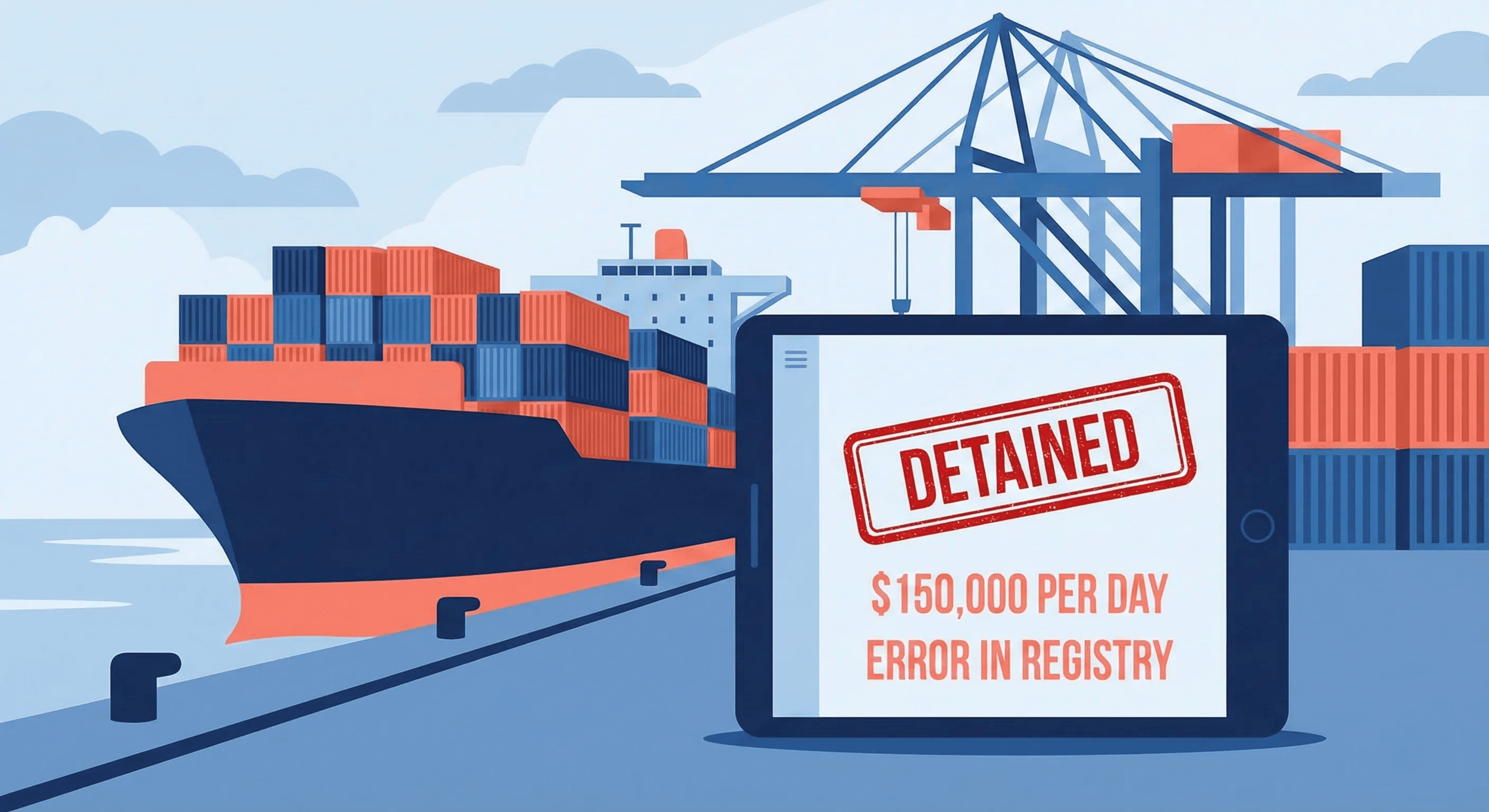
Maritime registry environment is uniquely high-stakes. Errors can lead to a vessel being detained in port, costing owners hundreds of thousands of dollars per day.
My core design challenge was to modernize the maritime service without disrupting the critical legal framework that keeps global trade moving.
02 - DISCOVERY AND RESEARCH
I partnered with a Business Analyst to deconstruct the registry. We co-led interviews to capture two angles simultaneously: I mapped the User Friction while the BA mapped the Compliance Logic. We leveraged internal registrars as 'Proxy Users' to identify critical bottlenecks.

Anxiety Drives Support
Clients weren't asking legal questions. They were panic-calling.
60% of support volume was simply asking: "Did you receive my file?"

The Ping-Pong Loop
Relying on manual PDFs, phone calls and emails created a workflow where applications bounced back and forth due to minor typos.
This manual entry resulted in a 30% rejection rate. Worse, global time zone lags turned these simple 5-minute fixes into 24-hour delays.

Human API Problem
Clients were annoyed by re-typing static ship data (Length, Year Built) that is already public record.
The system should fetch known data, shifting the user from Data Entry to Verification.
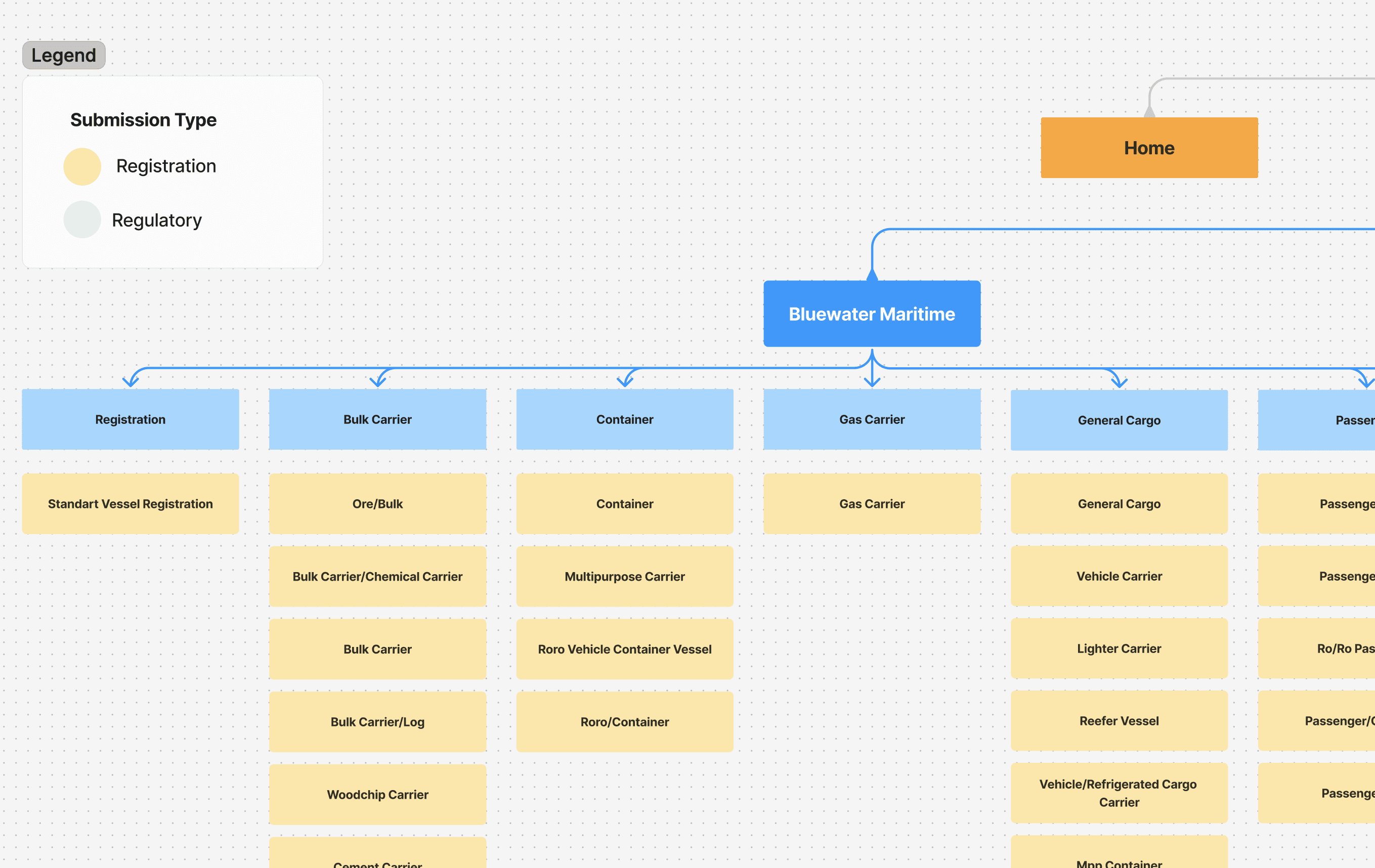
We discovered that the entire maritime ecosystem revolves around the physical ships. Fleet managers and registrars alike anchor their daily tasks directly to specific vessels. Aligning the software with this shared reality required us to rebuild the platform around an entity-centric architecture.
03- SOLUTIONS
Designing for Focus
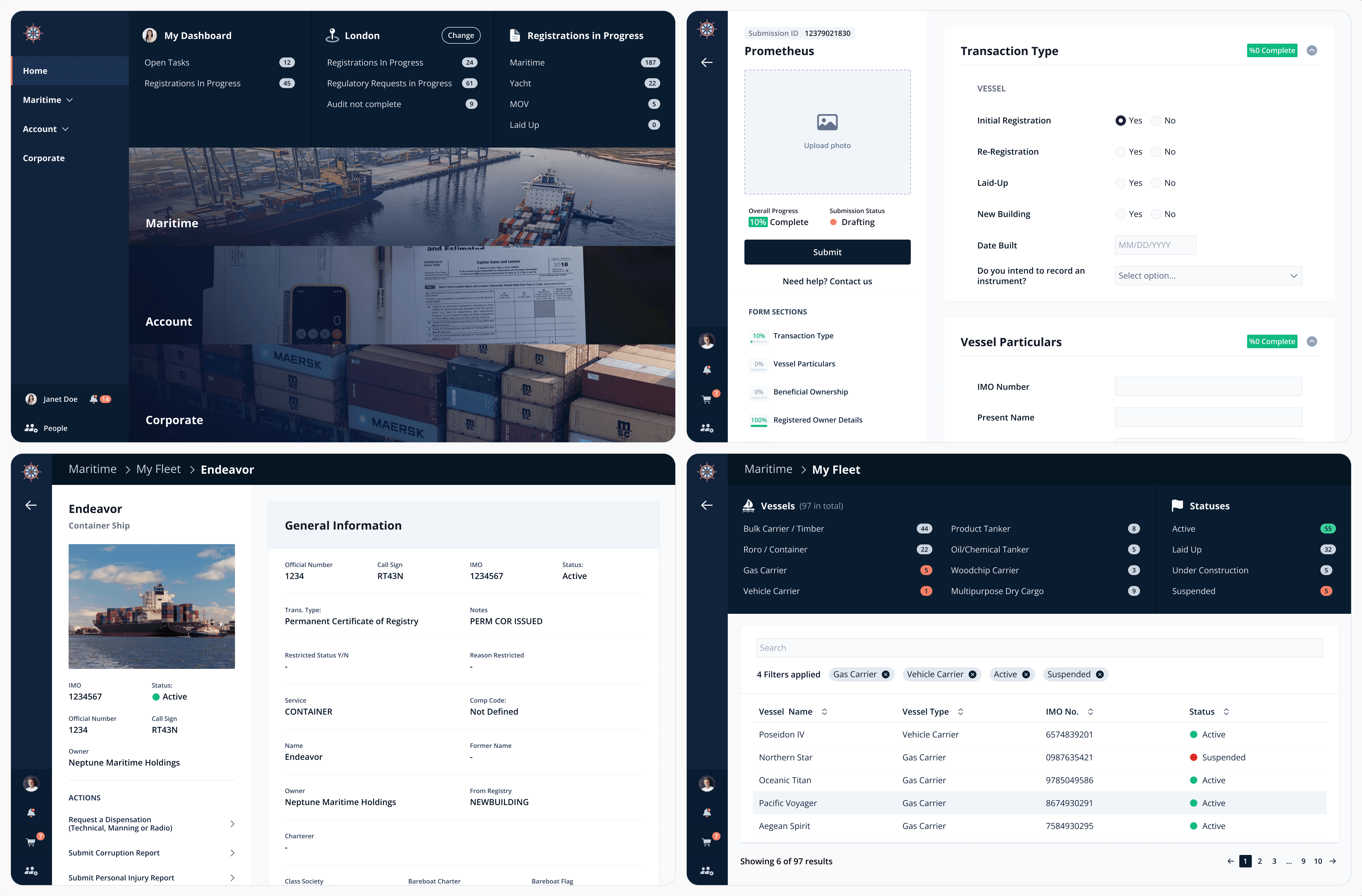
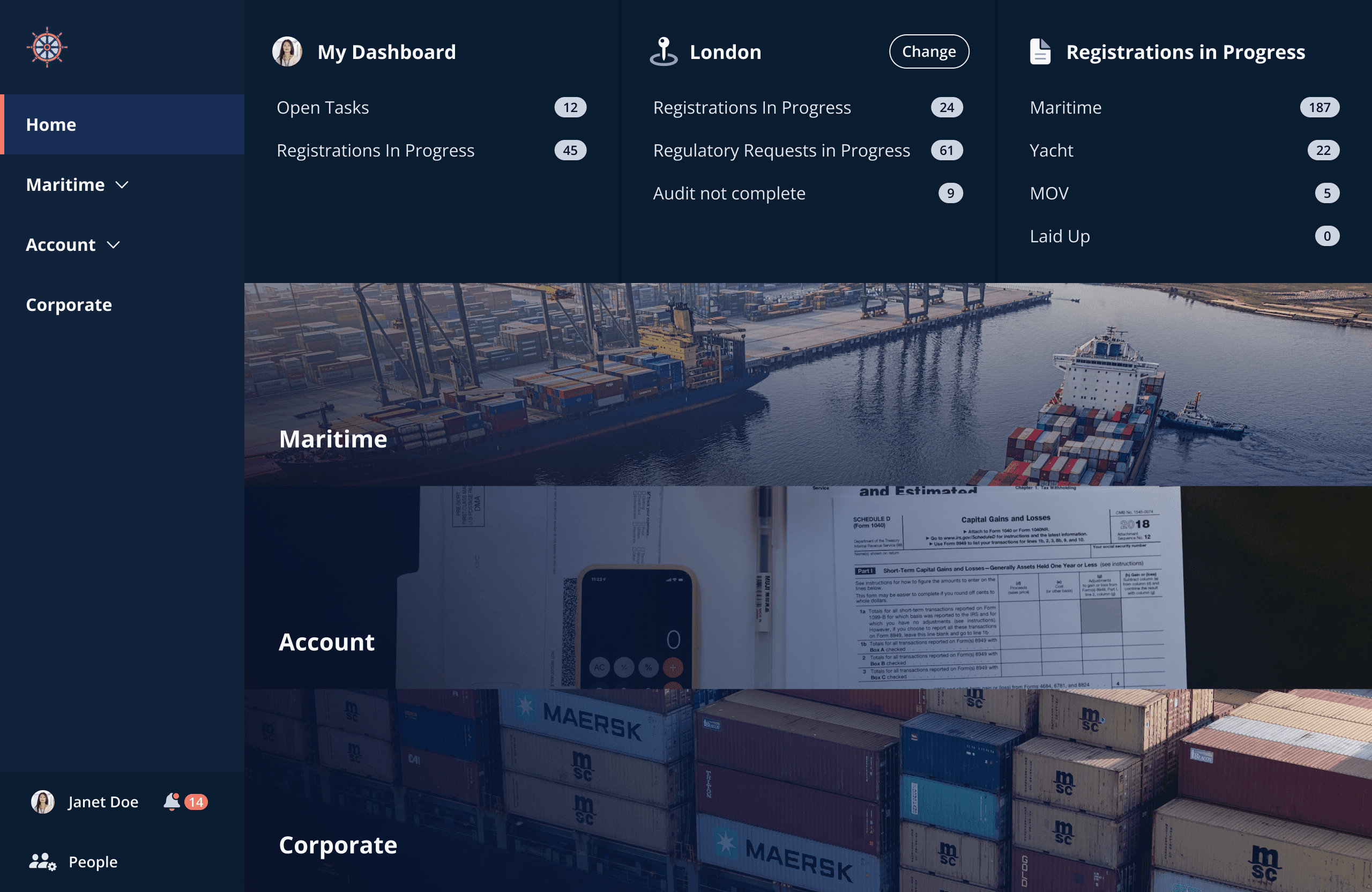
I designed role-based views that curate information based on the user's specific office and function. A registrar in London sees yacht renewals; an agent in Singapore sees commercial inspections. Numeric badges signal urgency, helping staff prioritize their day instantly.
Pacing the Data Entry
I couldn't reduce the legal requirements. A registration requires 100+ inputs. Instead, I used progressive disclosure. I broke the massive entity into digestible sections, allowing users to save and return as documents arrive.
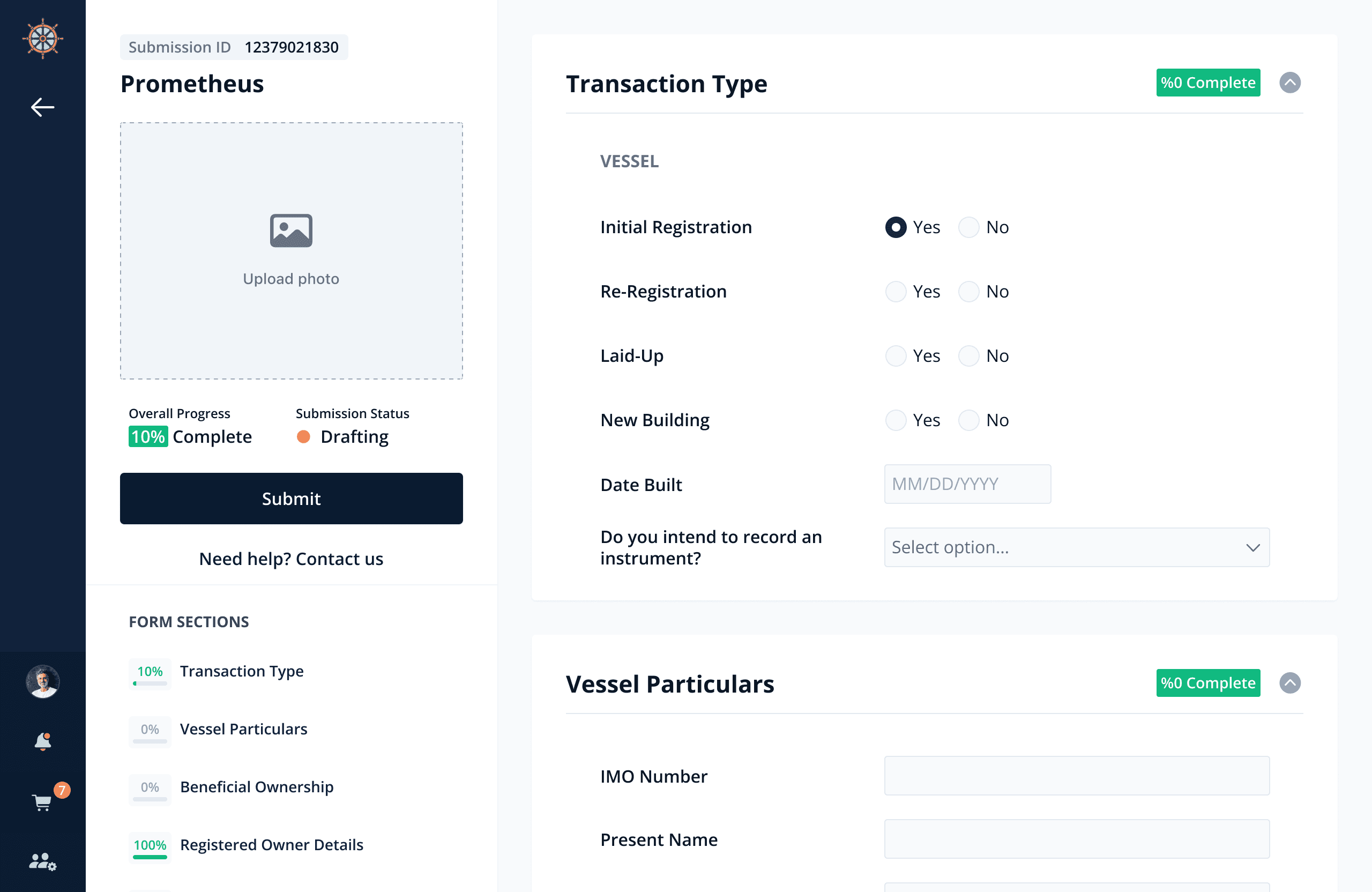
Sidebar Index
Tracks completion status.
Non-Linear
Jump to any section anytime.
Grouping
Logical clusters reduce cognitive load.
Managing the Chaos
Fleet managers don't just look at one ship; they manage dozens. I designed a faceted search system that allows non-technical users to perform complex queries without needing SQL.
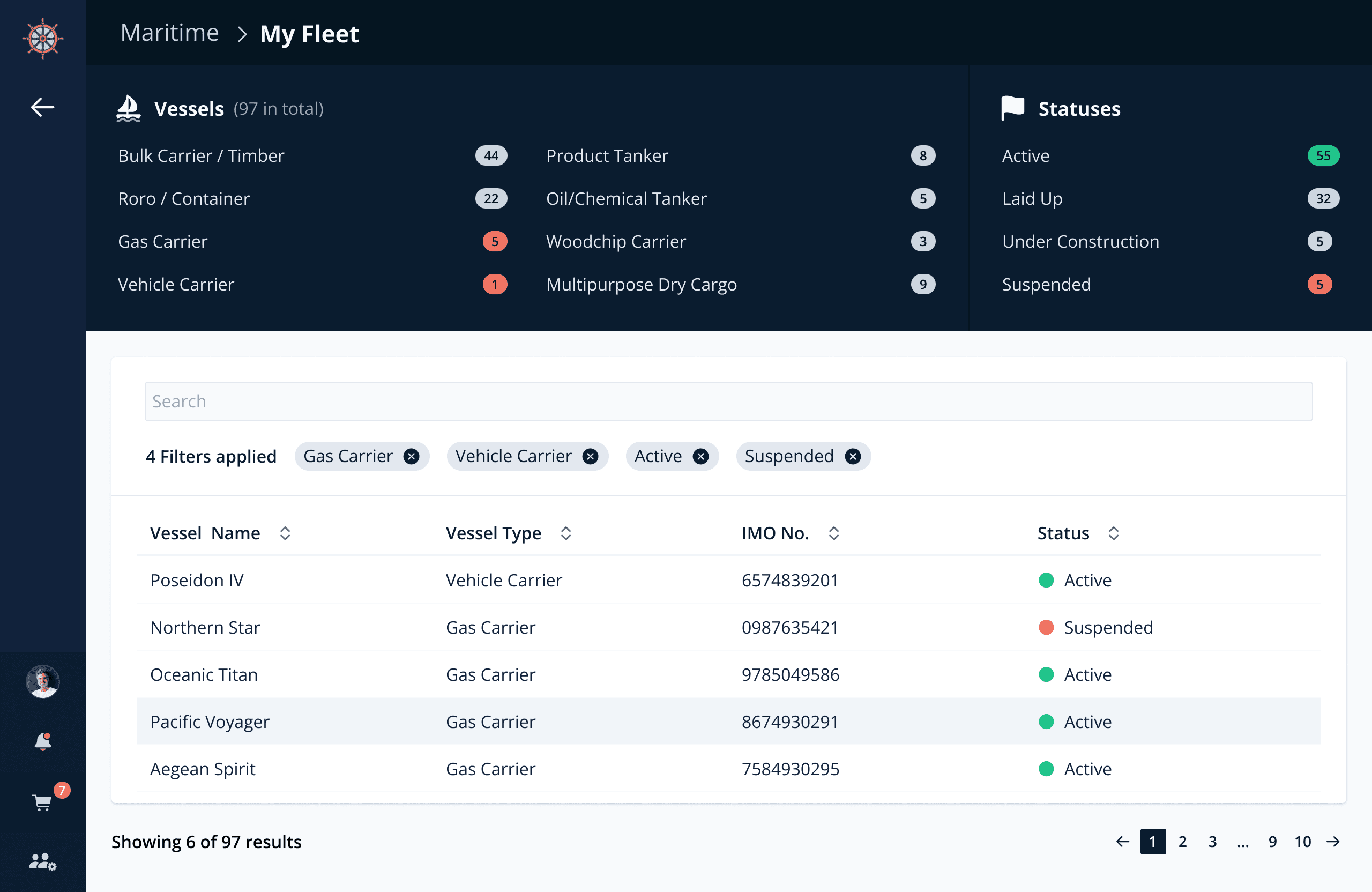
Semantic status colors allow for instant health checks.
Active filter chips clarify exactly what data is being shown.
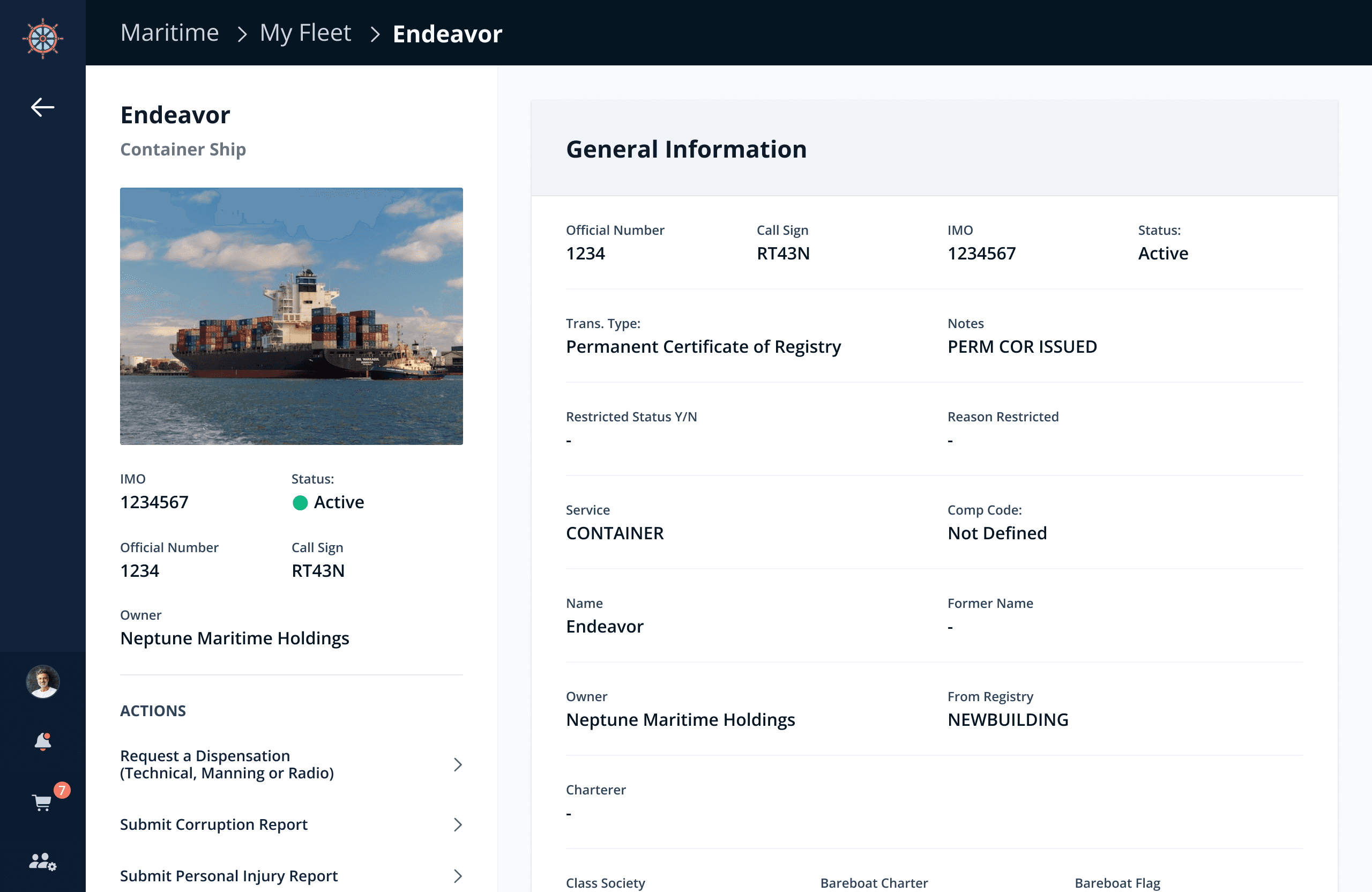
One Vessel, One View
I designed a unified Vessel Detail View that serves as the digital twin for every ship. Every attribute lives in a single, vertical scroll.
Solving the Bulk Payment parodox
Fleet managers needed the speed of bulk payments, but accounting required strict reconciliation to track exactly which ship paid for what.
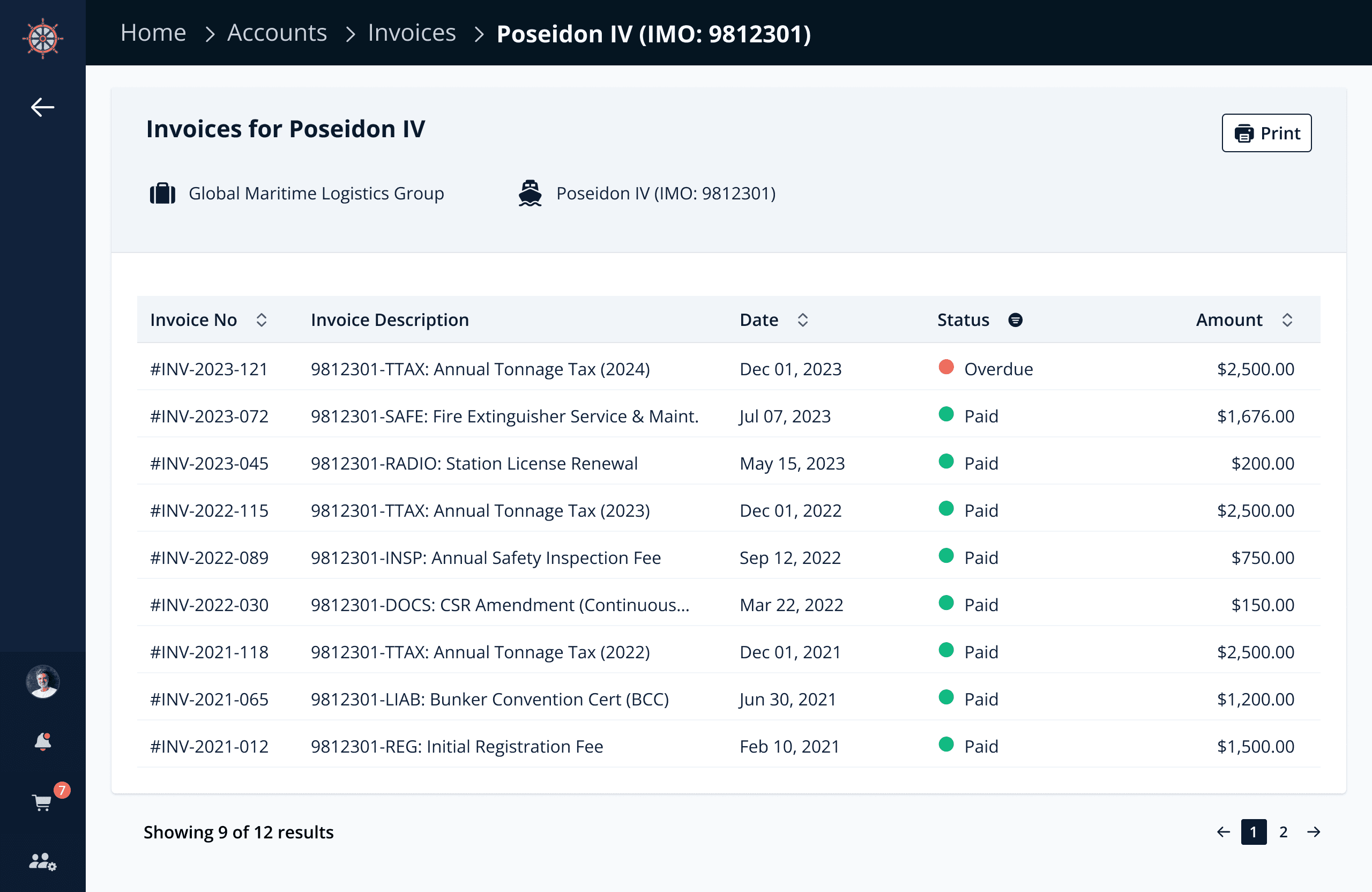
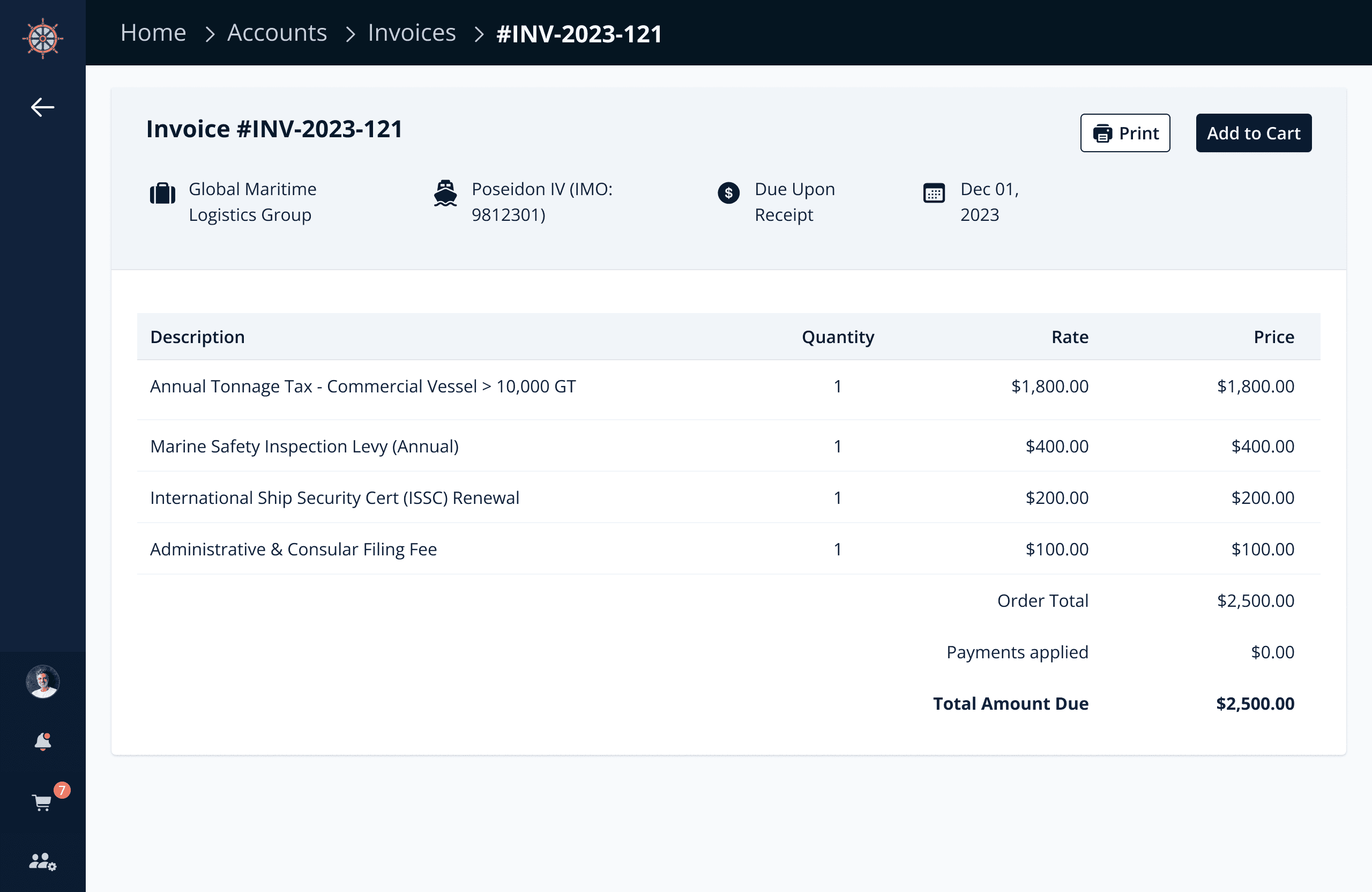
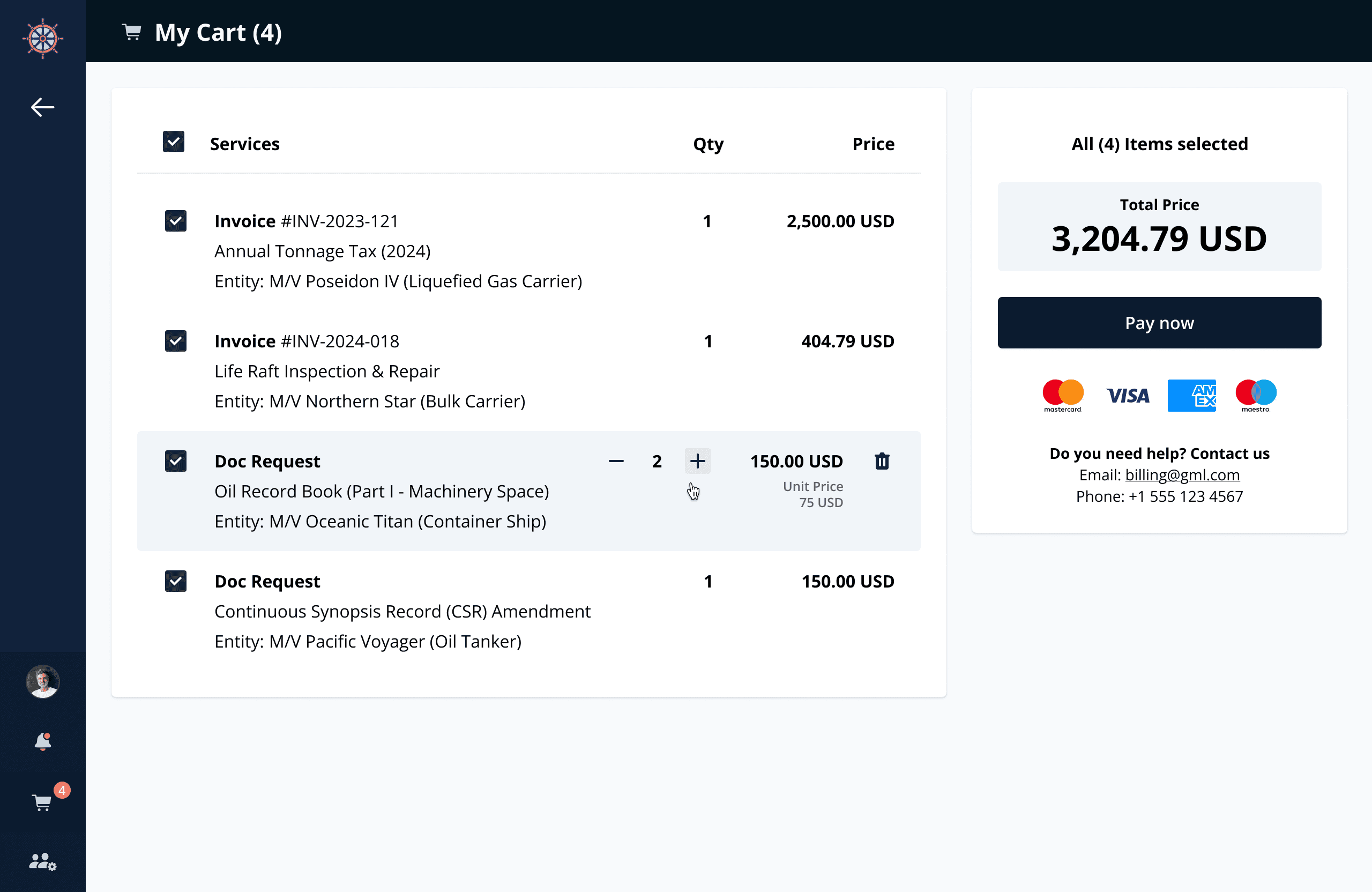
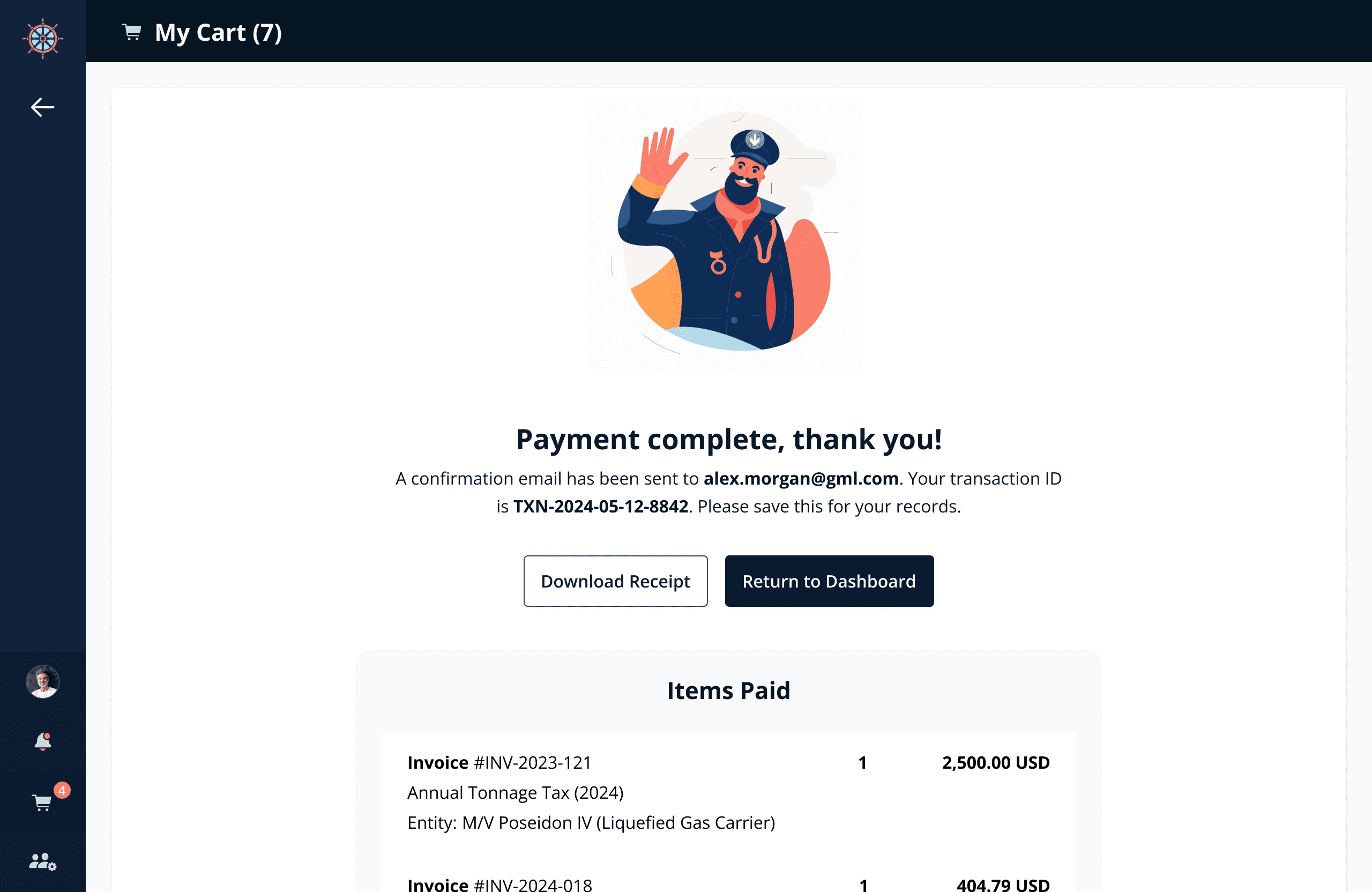
I designed a unified cart that forces a hard link between every invoice and its specific vessel entity. This architecture handles complex line items (combining intangible services like annual taxes with physical goods like logbooks) in a single transaction. The result is a seamless bulk payment flow that keeps ships moving while ensuring perfect data integrity for the back office.
04 — THE IMPACT

Operational Efficiency
Unified disconnected global offices into a single digital ecosystem, eliminating regional latency and version control errors.
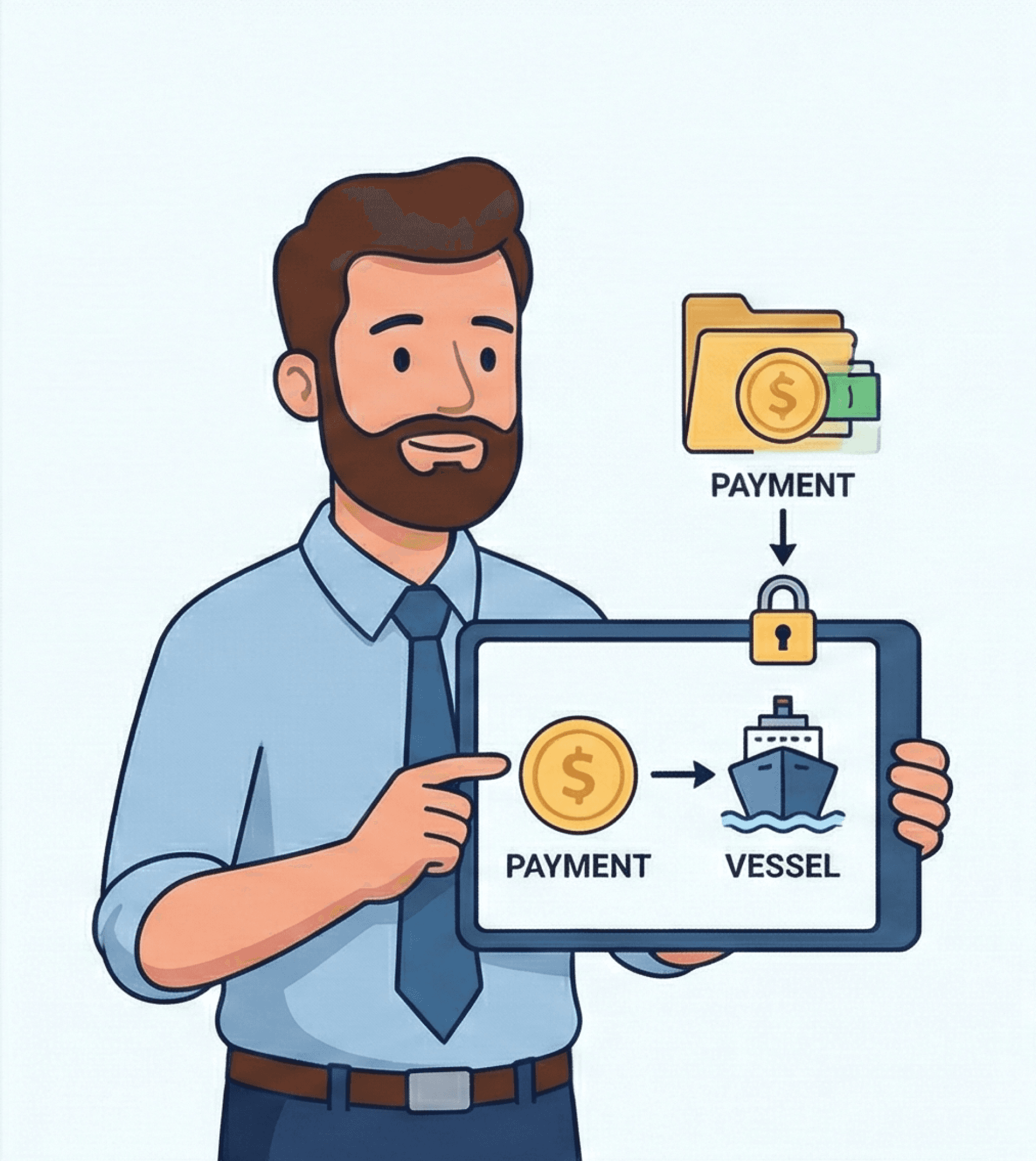
Financial Integrity
Replaced manual wire matching with an entity-first cart, ensuring 100% accurate attribution of funds to specific vessels.
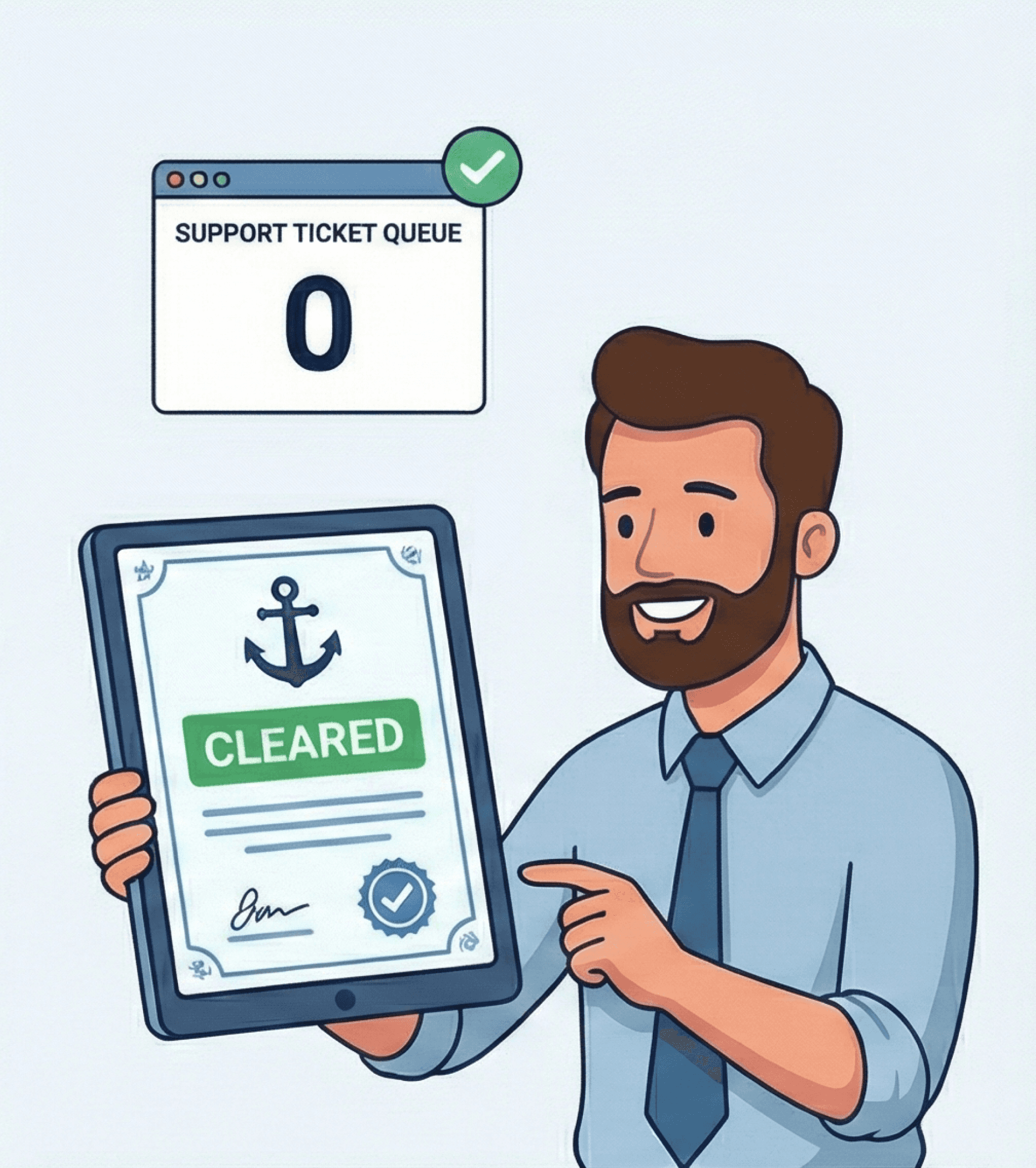
Reduced Support Volume
Self-service status tracking drastically cut routine Status Check tickets, freeing registrars to focus on complex problem-solving.